
Riding Arena Sizes: Essential Specifications and Practical Uses for Equestrian Facilities
Understanding the sizes and specifications of riding arenas is crucial for developing effective equestrian facilities. Different equestrian disciplines require specific dimensions for optimal performance and safety. This article will provide a comprehensive guide to riding arena sizes, detailing their specifications, uses, and the impact of various design elements. Many equestrians face challenges regarding arena sizing that can lead to inefficiencies in training and competitive performance. By comprehensively addressing these challenges, this article aims to offer valuable solutions and insights. We will explore standard dimensions across disciplines, how footing materials affect performance, important construction features, and cost factors associated with riding arenas.
What Are the Standard Dimensions for Riding Arenas by Discipline?
Riding arenas are designed with specific dimensions that vary based on the discipline being practiced. These sizes are essential to ensure safe and effective training environments for both horses and riders. Understanding these dimensions helps in adhering to regulatory standards and optimizing the training experience. Below is a comparison of standard sizes across various disciplines.
Which Sizes Define Dressage, Jumping, and General Riding Arenas?
The dimensions for riding arenas vary significantly based on the discipline. For dressage, arenas must be 60 meters long and 20 meters wide to comply with competition standards. Jumping arenas, essential for show jumping and related events, require a more substantial area, typically around 100 meters in length and 50 meters in width. General riding arenas, designed for casual riding and training, often have smaller dimensions, commonly around 40 meters by 20 meters. These specifications ensure that riders and horses can perform maneuvers safely and effectively.
How Do Indoor Arena Specifications Differ from Outdoor Riding Arena Sizes?
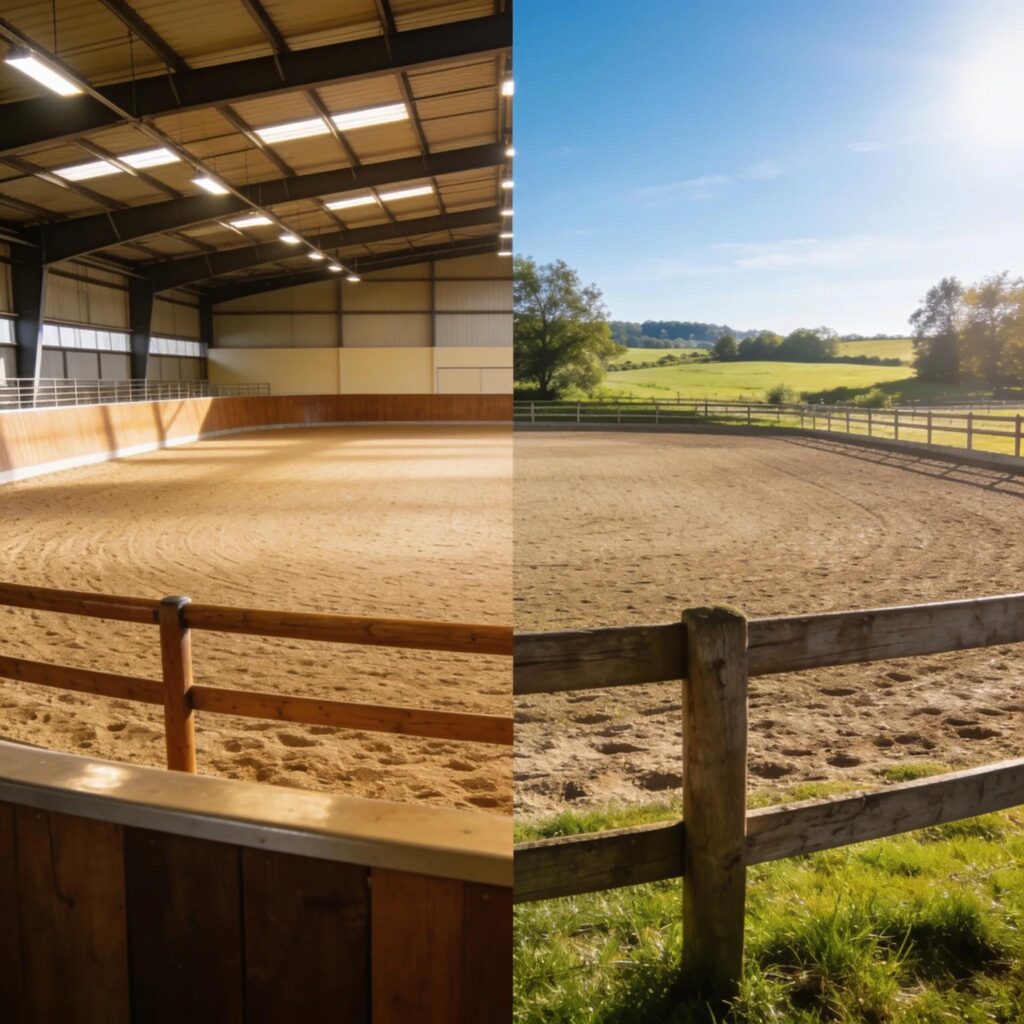
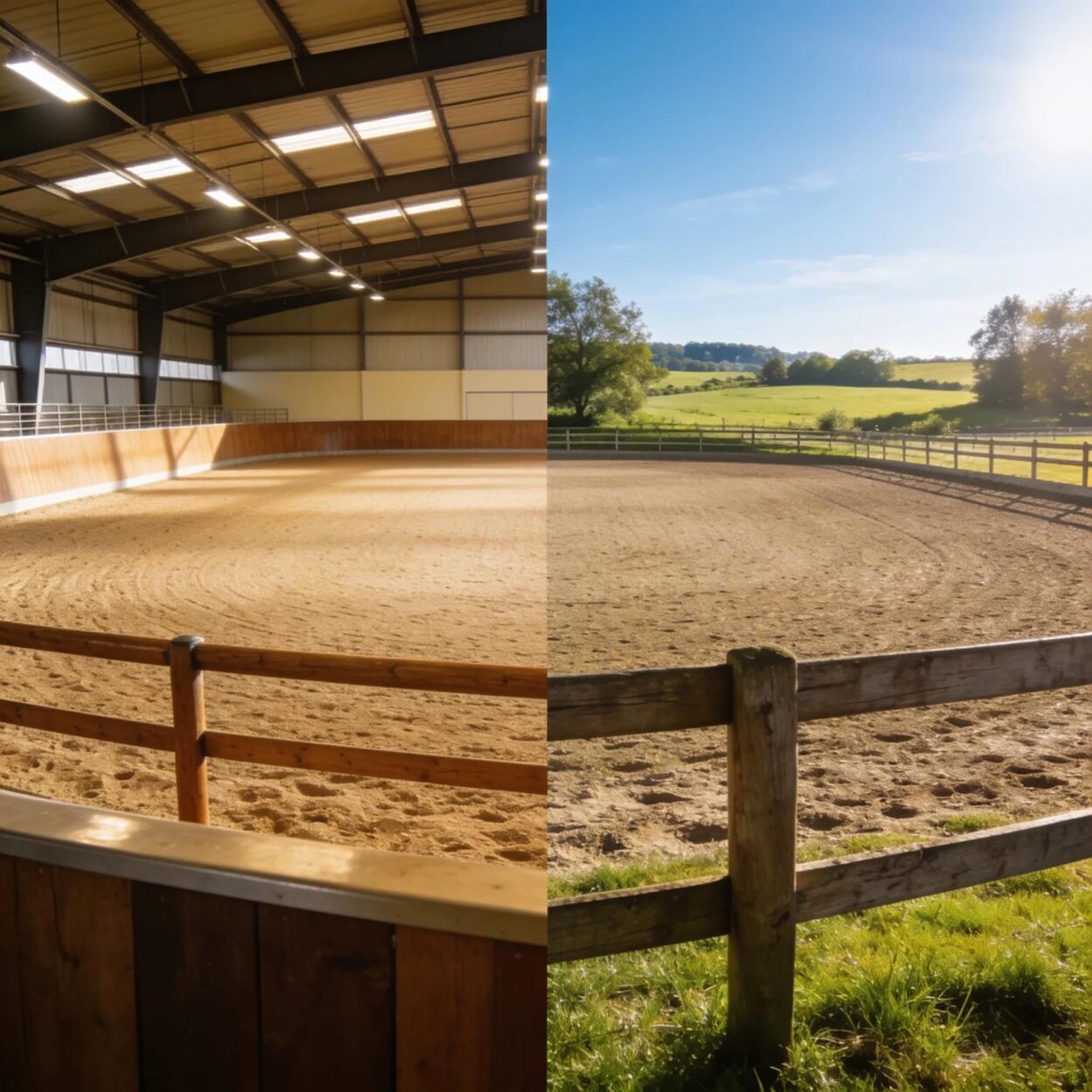
Indoor and outdoor arenas may have different specifications based on environmental considerations and performance needs. Indoor arenas often have higher ceilings, typically reaching at least 4-5 meters, which accommodates jumping and expansive movements. Additionally, they generally require better ventilation and lighting to ensure optimal conditions year-round. Outdoor arenas, on the other hand, take advantage of natural light and open space but must consider drainage and surface maintenance. Understanding these differences is vital for choosing the right type of arena for specific equestrian needs.
Standard Riding Arena Sizes: A Guide for Equestrian Facilities
The choice of footing material is critical for the safety, performance, and longevity of riding arenas. Various materials offer different benefits and challenges, influencing the overall success of training and competitions. Selecting the right type of footing can profoundly affect how horses perform, their safety, and how well the arena holds up over time.
What Are the Characteristics of Sand, Synthetic, and Clay Footing Materials?
Different footing materials such as sand, synthetic mixtures, and clay provide unique benefits for riding arenas. Sand, known for its cost-effectiveness, offers good drainage and flexibility, making it a popular choice for various disciplines. Synthetic footing, though typically more expensive, combines several materials to enhance shock absorption, reduce dust, and improve consistency across the surface. Clay footing provides stability but requires careful maintenance to avoid hardening or compaction, which can be detrimental to horse health.
How Does Footing Choice Affect Arena Maintenance and Horse Health?
Selecting appropriate footing directly impacts the maintenance protocols of riding arenas and the horses’ well-being. Poor footing can lead to injuries and long-term health issues for horses, alongside increased maintenance costs. Regular assessments of the footing type and condition are essential to ensure optimal performance and minimize risks, underscoring the importance of choosing suitable materials from the outset. This proactive maintenance ensures a safe and effective training environment.
What Are the Key Construction Features Essential for Riding Arena Durability?
Durability in arena construction is crucial for long-term functionality and safety. Key features such as drainage systems and lighting play a significant role in the success of riding arenas. Effective design and construction practices can mitigate potential issues and enhance user experience.
Why Is Proper Drainage Critical in Riding Arena Design?
Proper drainage is essential to prevent water accumulation, which can lead to hazardous footing conditions. An effective drainage system diverts excess water away from the arena surface, maintaining consistency and safety for horse training. A well-designed drainage system not only preserves the footing but also extends the life of the arena, saving costs associated with repairs and maintenance.
How Do Lighting and Fencing Enhance Arena Safety and Functionality?
Adequate lighting and secure fencing are vital to ensure safety and enhance arena usability. Good lighting allows for safe use during twilight hours and increases visibility for both horses and riders. Proper fencing prevents escapes and unintentional accidents, creating a secure environment conducive to effective training. Safety should always be prioritized in the design of any equestrian facility.
What Environmental and Sustainability Considerations Influence Modern Riding Arena Design?
Sustainability is increasingly becoming a priority in modern riding arena construction. Integrating eco-friendly practices not only enhances the environmental footprint of equestrian facilities but can also lead to improved maintenance efficiency and durability.
How Are Sustainable Footing Materials and Drainage Solutions Implemented?
Sustainable footing materials, often composed of recycled components, offer an eco-friendly alternative to traditional options. These materials generally require less water and energy for maintenance, helping reduce the overall carbon footprint of the facility. Additionally, innovative drainage solutions designed for sustainability can minimize erosion and promote environmental health, showcasing the potential for modern arena designs to contribute positively to the ecosystem.
What Recent Regulatory Updates Affect Riding Arena Construction Standards?
Regulatory standards are evolving to prioritize safety and sustainability within equestrian facilities. Recent updates may dictate specific requirements for materials used, drainage protocols, and structural features. Staying informed about these regulations is essential for facility owners to ensure compliance and optimize the safety and functionality of their arenas.
What Are the Typical Cost Factors and Maintenance Requirements for Riding Arenas?
Understanding the cost factors involved in building and maintaining a riding arena is crucial for prospective owners. Various elements influence both initial construction and long-term expenditures, highlighting the importance of strategic planning.
Which Elements Most Influence Initial Construction and Long-Term Expenses?
Initial construction costs are primarily influenced by the choice of materials, design complexity, and labor expenses. Sustainable options, while often more expensive upfront, can lead to significant long-term savings through reduced maintenance and operational costs. Additionally, considering site-specific factors, such as drainage needs and environmental impacts, is essential to develop a budget that encompasses both initial and ongoing expenses.
How Can Proper Maintenance Extend Riding Arena Lifespan?
Regular maintenance is key to extending the lifespan of a riding arena. Implementing a routine care schedule, including surface inspections, footing adjustments, and drainage checks, can prevent significant deterioration. By prioritizing maintenance, owners ensure that their investment remains effective and safe for both horses and riders over time.